When fast gravel starts exposing every weak point
One loose, choppy stretch at speed can tell you more about a motorcycle than a hundred easy road miles. A bike that feels lively on smooth tarmac can turn vague on washboard, nervous under braking, or simply exhausting once sand, rocks, and repeated hits start stacking up. That matters because high-speed off-road stability is not only about peak power; it comes from weight control, suspension travel, wheel sizes, ground clearance, and how calm the front end stays when the surface gets messy.
For that reason, this shortlist looks at seven rally and adventure-leaning motorcycles through a practical lens: which ones stay composed when pace rises, which ones are easier to trust as your skill grows, and where each model shifts the compromise between off-road focus and day-long usability. The KOVE 800X Rally sits at the centre of that comparison because its published numbers point directly at the traits many gravel and desert riders care about most.
The seven bikes worth comparing first
1. KOVE 800X Rally
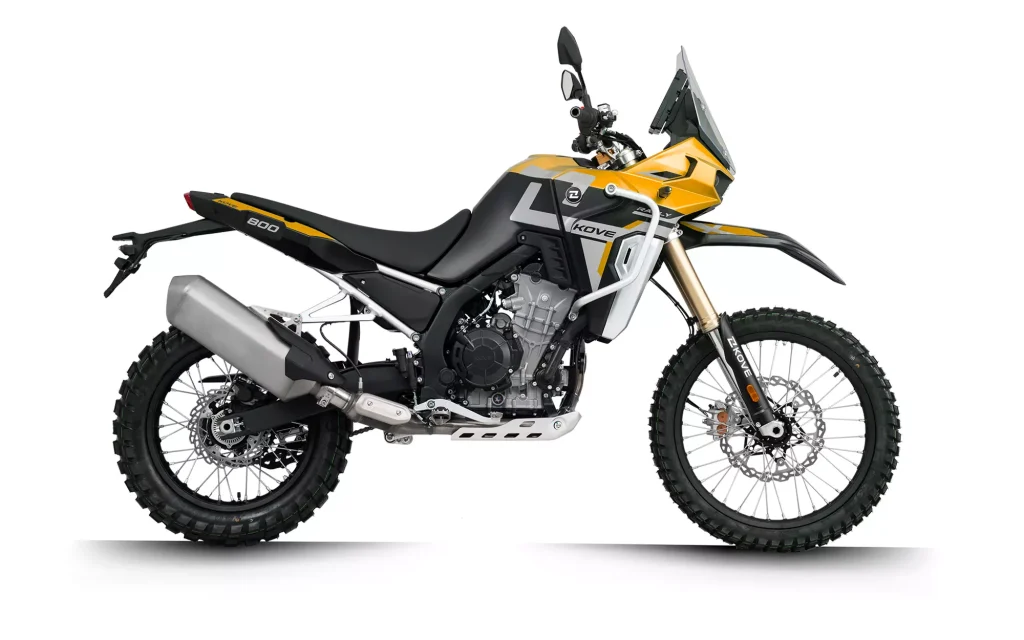
Riders who want a rally-first machine without jumping straight to a race-only platform should start here. The KOVE 800X Rally stands out because it combines middleweight twin-cylinder power with unusually light published weight and long-travel suspension, which is exactly the mix that helps a bike feel calmer when terrain gets rough and speed begins to climb. KOVE also backs the model with a dedicated service page that includes manuals and warranty material, which matters if you are looking beyond brochure numbers.
Why it stands out
- Published curb weight: 176 kg
- Engine: 799 cc twin
- Max power: 69.5 kW at 9,000 rpm
- Max torque: 79.0 Nm
- Fuel tank: 20 L
- Suspension travel: 270 mm front, 240 mm rear
- Ground clearance: 293 mm
- Rally-focused 21/18 wheel format is part of the model’s off-road intent
Best for
- Riders who prioritise lower mass over extra touring bulk
- Faster gravel, open desert tracks, and rougher mixed-surface riding
- Buyers who want a production bike with explicit rally positioning rather than rally-style bodywork alone
What to watch
- Its tall stance and off-road bias will suit confident riders better than complete beginners
- Dealer familiarity may vary by market compared with larger Japanese brands
- A focused chassis can be less relaxed for riders whose riding is mainly road touring
2. KTM 890 Adventure R
If your priority is outright pace from a mainstream off-road adventure platform, the KTM 890 Adventure R remains one of the clearest comparison points. It brings strong output, serious suspension travel, and proven off-road geometry, so experienced riders often trust it when the route mixes fast gravel with more technical sections. The trade-off is that published weight sits above the KOVE, which can matter once fatigue sets in or the terrain slows down.
Why it stands out
- 889 cc parallel twin
- 106 PS and 100 Nm
- 240 mm front and rear suspension travel
- 20 L fuel tank
- KTM positions its 2026 rally-oriented variant around desert and competition heritage
Best for
- Experienced riders who want stronger acceleration and a hard-edged off-road feel
- Buyers already comfortable managing a more physical middleweight adventure bike
What to watch
- Higher output is useful only if you can still stay relaxed on broken surfaces
- Extra mass versus lighter alternatives can show up in slower sand and repeated recovery moments
- The sharper setup may feel less forgiving to riders still building loose-surface confidence
3. Yamaha Ténéré 700
Not every rider needs the most aggressive bike in the class. The Yamaha Ténéré 700 earns its place because it delivers a slim-feeling platform, fully adjustable front suspension, and manageable twin-cylinder performance without burying you in complexity. That combination makes it one of the easier ways to build confidence on faster gravel while still owning a bike capable of genuine back-country travel. Yamaha’s published wet weight is 459 lb, and the bike uses a 689 cc twin with 8.3 inches of front travel.
Why it stands out
- 689 cc liquid-cooled twin
- 43 mm inverted fully adjustable fork
- 8.3-inch front suspension travel
- 459 lb wet weight
- Yamaha describes the bike as having a slim feel for off-road confidence.
Best for
- Riders moving from mixed-surface travel into faster gravel riding
- Buyers who want predictable handling over maximum electronics or maximum power
What to watch
- It is still a tall middleweight, so low-speed confidence matters
- Suspension travel is generous, though not as extreme as more rally-focused alternatives
- If you carry heavy luggage often, setup becomes more important to preserve front-end calm
4. Suzuki V-Strom 800DE
Some riders want gravel stability, but they also know the bike must cover long road sections, luggage duty, and everyday travel. The Suzuki V-Strom 800DE fits that brief well because it blends a 21-inch front wheel and long-travel suspension with a more travel-friendly ownership character. Its 776 cc parallel twin, 20.0 L tank, 220 mm ground clearance, and gravel-oriented electronics package make it a strong crossover option, though its 230 kg curb weight places it firmly on the heavier side of this list.
Why it stands out
- 776 cc DOHC parallel twin
- 220 mm front and rear suspension travel
- 220 mm ground clearance
- 20.0 L fuel capacity
- 855 mm seat height
- 230 kg curb weight
- Gravel traction control mode and rider-adjustable ABS are part of its practical toolkit.
Best for
- Riders splitting time between touring miles and rougher unpaved routes
- Buyers who want modern rider aids alongside credible off-road dimensions
What to watch
- Heavier published weight can make the bike feel less lively in deep sand or awkward recoveries
- More electronics can help, but they do not replace suspension setup and tyre choice
- It is better described as adventure-practical than ultra-rally-focused
5. Honda CRF300L Rally
When your main issue is confidence rather than outright pace, a lighter-displacement rally-style bike can be the smarter answer. The Honda CRF300L Rally is the easiest recommendation here for riders who want to learn line choice, braking on loose surfaces, and body positioning without managing the momentum of a big twin. Its softer power delivery and more approachable ownership story make it especially useful for lighter travel loads and skill building.
Why it stands out
- Lower intimidation than middleweight twin-cylinder rally bikes
- Easier to correct when pace, sand, or braking points go wrong
- Rally-inspired bodywork adds wind protection for longer mixed-surface days
- Better suited to riders developing off-road rhythm rather than chasing top-end speed
Best for
- Newer gravel riders
- Lighter route planning and back-road travel
- Riders who value recovery, simplicity, and reduced fatigue over outright thrust
What to watch
- It will not deliver the same effortless high-speed authority as the larger twins here
- Heavy luggage and long motorway stretches are not its strongest use case
- If your riding regularly involves wide-open desert pace, you may outgrow it
6. Kawasaki KLR650
The Kawasaki KLR650 remains relevant because plenty of riders still value steadiness, simplicity, and range over aggressive off-road sharpness. It is not the quickest or lightest bike in this group, but its single-cylinder layout, long-running reputation, and large fuel capacity make it attractive for riders who want calm, planted progress. Kawasaki lists a 652 cc single, 34.3-inch seat height, 8.3-inch ground clearance, 6.1-gallon fuel capacity, and curb weight of 460.6 lb for ABS or 456.2 lb for non-ABS.
Why it stands out
- 652 cc single-cylinder engine
- 6.1-gallon fuel capacity
- 34.3-inch seat height
- 8.3-inch ground clearance
- 456.2 lb to 460.6 lb curb weight depending on version.
Best for
- Riders who care more about durability and range than aggressive off-road pace
- Travellers who prefer a simpler ownership experience
What to watch
- It is better at steady-speed travel than quick front-end reactions in rough, fast terrain
- Weight remains noticeable when the route becomes technical
- The older-school feel is a feature for some riders, but a drawback for others
7. SWM Superdual
The SWM Superdual is the outlier pick in this group, and that is exactly why it earns a place. It appeals to riders who want a more basic adventure-ready platform with fewer electronic layers and a simpler ownership proposition.
Why it stands out
- Electronics-light approach
- Adventure-ready positioning on the official site
- Owner resources remain available for Superdual X and T.
Best for
- Riders who prefer a simpler machine and are less concerned with latest-generation rider aids
- Buyers comparing value-oriented alternatives to newer middleweights
What to watch
- Publicly available official US details are more limited, so direct spec-for-spec comparison needs caution
- It is harder to frame as a parity choice against newer rally-biased middleweights
- Buyers should verify current support, equipment, and market availability before committing
What actually makes a rally bike feel stable at speed
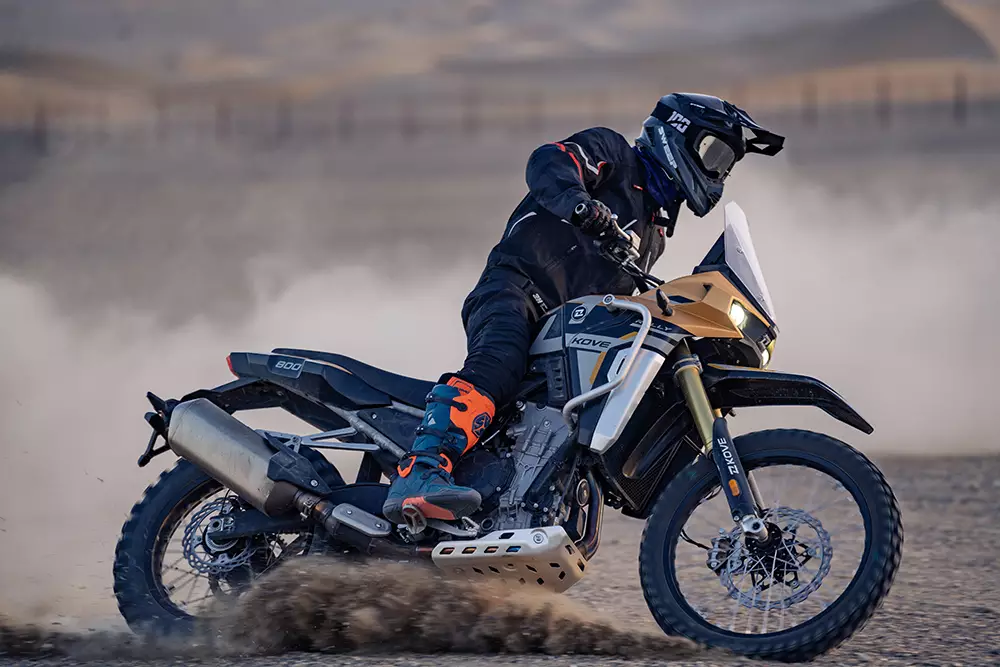
A stable off-road motorcycle usually earns that feeling from several parts working together, not from one headline spec. A 21-inch front wheel helps the bike track more calmly over loose terrain, while longer suspension travel gives it more room to absorb repeated hits before the chassis starts deflecting. Lower weight also matters because it reduces the energy you need to manage when the bike gets offline. That is why the KOVE’s combination of 176 kg curb weight, 270 mm front travel, and 293 mm ground clearance reads so strongly on paper, while heavier options can feel more demanding once you are tired.
Moreover, tyres, braking condition, and suspension health still decide whether a good platform feels trustworthy in the real world. The UK motorcycle MOT inspection guidance treats tyre structural damage, incorrect fitment, and inadequate tread as serious defects, and the Highway Code states motorcycles must have at least 1 mm of tread depth across three-quarters of the tread breadth in a continuous band around the tyre.
Weight, power, and confidence: where your compromise sits
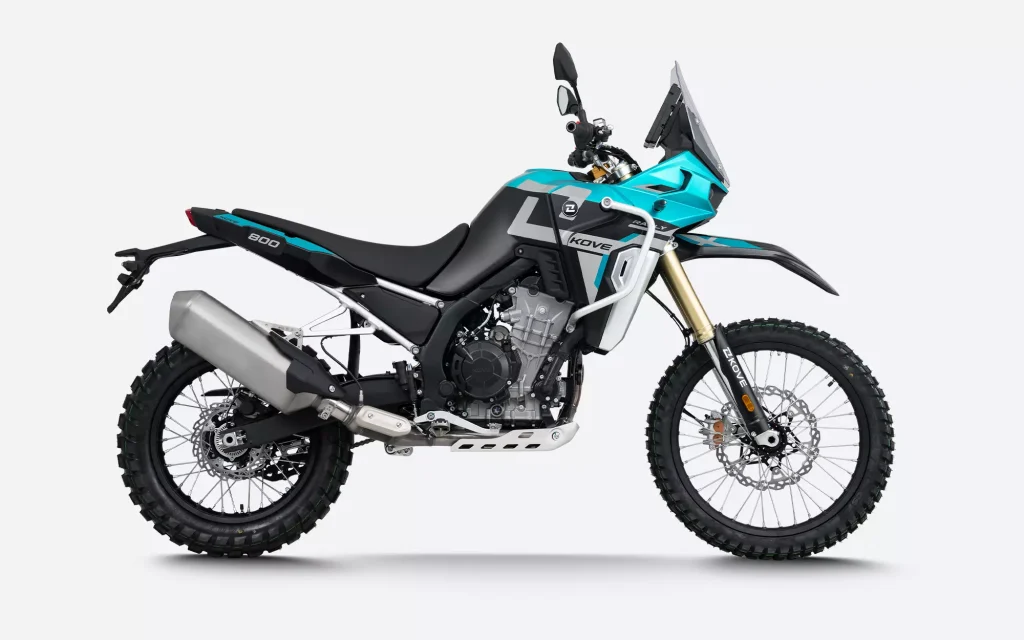
It is easy to assume the most powerful bike will be the most confidence-inspiring at speed, but that is not always how it plays out off road. Controllable drive often matters more than headline output because a predictable throttle lets you stay loose and balanced when the surface changes under you. That is why riders still progressing on gravel may ride a Yamaha Ténéré 700, Honda CRF300L Rally, or Kawasaki KLR650 more confidently than a sharper, faster machine.
Quick comparison table
| Bike | What supports stability | Best fit | Main trade-off |
| KOVE 800X Rally | Low published weight, long travel, strong clearance | Rally-focused riders wanting lighter twin-cylinder performance | Tall, focused setup may feel demanding for novices |
| KTM 890 Adventure R | Strong output and serious off-road suspension | Experienced riders riding fast on rough terrain | More physical feel than lighter options |
| Yamaha Ténéré 700 | Slim chassis feel and predictable balance | Riders building speed confidence on gravel | Less extreme than dedicated rally-biased picks |
| Suzuki V-Strom 800DE | 21-inch front, rider aids, touring usability | Mixed travel and dirt use | Heavier curb weight |
| Honda CRF300L Rally | Approachability and easier recovery | Newer off-road riders | Limited high-speed authority versus bigger twins |
| Kawasaki KLR650 | Steady chassis and large fuel range | Durable, calmer mixed-surface travel | Not the sharpest in rough fast sections |
| SWM Superdual | Simpler ownership proposition | Value-minded, electronics-light buyers | Less transparent current official detail |
Three checks to make before you buy for desert or fast gravel use
You do not need race ambitions to use rally-bike logic well. However, you do need to be honest about where your confidence disappears. If the problem shows up when braking into loose corners, look first at tyre type, suspension setup, and weight. If the problem appears when you are tired late in the day, seat height, recovery effort, and luggage load matter just as much as power.
Check the chassis numbers first
- 21-inch front wheels generally support calmer tracking off pavement
- More suspension travel usually helps on washboard, rocks, and square-edge hits
- Ground clearance matters if your pace includes ruts, ledges, or deep braking bumps
Check your tired-rider scenario
- Ask which bike you can still manage after six hours, not only on your best morning
- Heavier models may feel planted, but they ask more from you in sand or low-speed corrections
- A lower-stress bike often makes you faster in the real world because you stay fresher
Check support expectations
KOVE’s service page publishes manuals and warranty files for the 800X Rally, which is useful if after-sales visibility is part of your buying decision. On the maintenance side, brake condition, lever travel, tyre fitment, and suspension condition are all central safety checks in the current UK motorcycle MOT guidance, so a promising spec sheet should never replace a disciplined pre-ride inspection habit.
The strongest pick if high-speed calm is your main goal
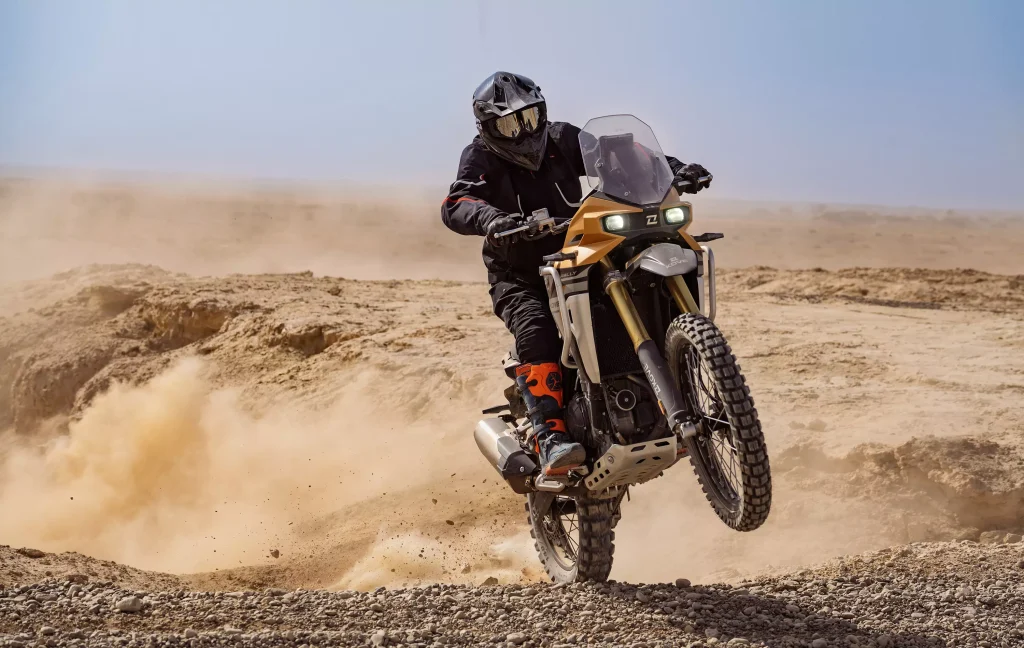
If you want one bike from this list that most directly matches the brief of staying stable and confident at speed off road, the KOVE 800X Rally is the clearest focal point. Its published combination of 176 kg curb weight, 799 cc twin-cylinder power, 270 mm front travel, 240 mm rear travel, 293 mm ground clearance, and 20 L tank gives it a notably rally-forward profile for riders who care about fast gravel and open-terrain composure.
That does not mean it is automatically the right answer for everyone. The Yamaha Ténéré 700 remains easier to recommend for broad, confidence-building versatility, the Suzuki V-Strom 800DE suits riders who need more travel comfort and electronics support, and the Honda CRF300L Rally still makes more sense when skill growth matters more than raw pace. Yet if your shortlist begins with genuine off-road intent rather than styling alone, KOVE deserves to be near the top.
